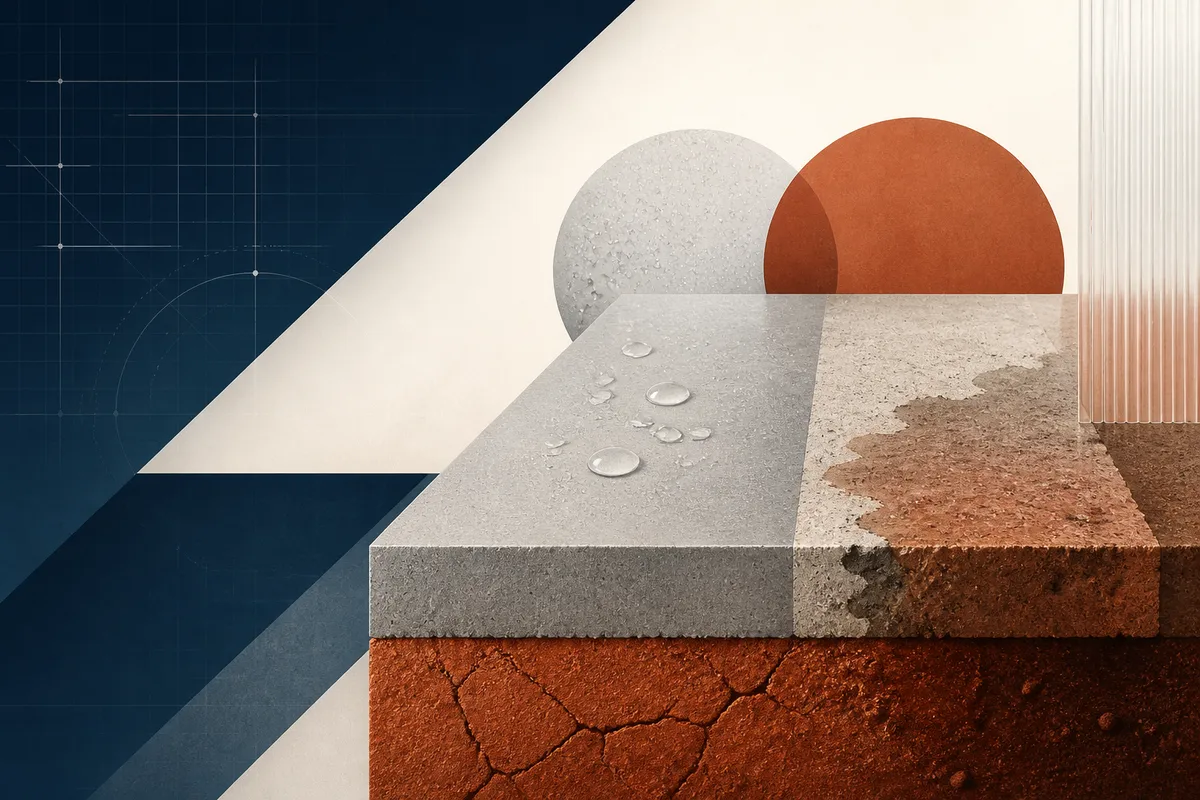
Choosing Between Acrylic and Penetrating Concrete Sealers for Red Clay Defense
Homeowners in the Oklahoma City metro face a unique challenge with local red clay. This soil contains iron oxide, which can act as a pigment that discolors untreated concrete. Most property owners wait until a hue has already set in before seeking a solution, but once microscopic particles wedge themselves into the concrete's capillary structure, they become difficult to extract.
This guide breaks down the mechanics of concrete sealing specifically for environments with heavy clay. It compares topical acrylics against penetrating chemistries to help residents determine which barrier will actually keep their driveways and patios clean.
Why Red Clay Staining Persists on Untreated Slabs
Standard concrete is a porous material that draws in liquids and fine particulates through capillary action. In the local climate, several factors contribute to the staining process:
- Dust carries particulates into the surface texture where they can settle into the cement paste.
- Stormwater saturates the clay, turning it into a slurry that can enter the pores of the concrete.
- Temperature shifts cause the concrete to expand and contract, which may draw fine dust into the slab.
- High-traffic areas on driveways grind abrasive clay particles into the finish, wearing down the surface.
The Sealer Selection Playbook
1Identify the Primary Threat
Before selecting a product, determine if the goal is to repel water or to block physical debris. While moisture protection is vital for structural longevity, preventing staining requires a product that handles the physical silt and dust typical of Oklahoma City.
2Deploy Acrylics for a Sacrificial Barrier
Topical acrylic sealers sit on top of the concrete, creating a film that prevents clay from touching the stone or cement. This layer means the mud sits on the sealer, not the concrete, making it easier to wash away. These are available in both solvent-based and water-based formulas, offering varying levels of gloss concretesealerreview.com.
3Use Penetrating Sealers for Structural Defense
Penetrating sealers dive deep into the pores to provide long-lasting protection against water, stains, and contaminants concretecoloursystems.com.au. They are a popular choice for their ability to provide deep protection while maintaining a natural appearance concretesealerreview.com. Because the surface pores remain breathable, very fine dust can still find its way into the surface texture if not cleaned.
4Evaluate Maintenance Cycles
Film-forming acrylics are sacrificial, meaning they wear down over time and require maintenance. Penetrating sealers provide deep protection but do not form a glossy film on the surface.
The Interaction of Surface Energy and Silt
The efficacy of the best sealer to prevent red clay stains is often a matter of surface energy. Acrylics provide a smooth surface that makes it difficult for wet clay to gain a foothold. Regular cleaning is recommended to prevent the buildup of abrasive particulates. When a topical sealer is present, this cleaning is more effective because the iron oxide in the clay cannot easily reach the cement paste. If a natural look is preferred, a penetrating sealer is the right choice, but the homeowner should maintain the surface to prevent "shadowing" from soil over time.
How OKC Concrete Staining helps
A professional sealing project typically begins with a deep cleaning to ensure no existing deposits are trapped under the new barrier. Technicians assess the porosity of the slab to determine if a film-forming acrylic or a penetrating sealer is better suited for the specific Patio Staining or driveway project. A standard scope of work includes edge-to-edge coverage, specialized application tools to prevent puddling, and a final inspection to ensure the barrier is consistent across high-traffic zones.
Frequently asked questions
Will a "wet look" sealer prevent red clay stains better than a matte one?
Generally, yes. High-gloss "wet look" sealers are typically acrylics that provide a physical shield over the concrete pores. This makes it harder for red clay to penetrate the surface.
Can I apply a new sealer over concrete that is already stained orange?
No, the concrete should be cleaned to remove deposits before sealing. If you seal over dirt, you are essentially "locking in" the stain, making it a permanent part of the slab's appearance.
How long does a typical acrylic sealer last?
Durability varies by product and traffic. Acrylic sealers are generally rated for moderate durability and provide a glossy appearance, but they will wear down over time and require re-application to maintain the protective barrier concretesealerreview.com.
Is a penetrating sealer enough for a driveway near a construction site?
If the driveway is constantly exposed to heavy mud and clay runoff, a penetrating sealer protects the internal structure, but a topical barrier may be preferred to keep the mud on the surface for easier removal.
How does the environment affect sealer application?
Environmental conditions like temperature and moisture can affect how a sealer bonds to the concrete. Professional crews monitor local conditions to ensure the sealer is applied correctly to achieve a long-lasting finish.
What happens when you get in touch: you describe the situation, we ask the few questions that actually change the answer, and you get a clear scope and next step — no obligation.